

Our New Solar System
- 19th Oct 2026
- Author: Dan Kendall - Curator
Don’t worry, Earth is not leaving the Solar System. This isn’t a report on some Brexit-style vote where Earth is joining Proxima Centauri. Thinking about it, if it were, I guess it would just be called ‘Exit’. Enough space politics though, this blog is about our new Our Solar System gallery.
Back in August 2025, I wrote a blog saying, ‘Goodbye to the Outer Solar System’. At the time, I made some bold predictions:
-
The new gallery would be better.
-
On opening day, scientists would discover Planet 9 and ruin everything.
So, how did those predictions work out?
What's Changed?
Firstly, is the new gallery better than the old one? Well, yes, of course! Granted, I’m biased, but I think I’m justified. There’s a lot more going on than the old one. Planets hanging from the ceiling. Games to play, challenges to take on, things to look at, things to, well, … smell.
If you visited Our Solar System before, you might spot things that haven’t changed. The Mercury, Venus and Mars sections have only had minor updates. The big differences are in the Earth and outer planets sections. We now focus on how the Solar System impacts Earth. Literally. We’ve added more meteorites and a sample of the K-Pg boundary that reveals the aftermath of the asteroid that wiped out the dinosaurs. And we’ve added a dinosaur too, because, well, why not? Which, let me tell you, has made the Marketing Team very happy!

A New Outer Solar System Experience
Gone is the Bean Can interactive, looking at the pull of gravity on different planets. In their place, Gravity Apples – affectionately known as ‘The Grapples’. If you’ve ever wondered if you could pick up a refreshing Golden Delicious on the Sun, wonder no more. And if you dropped your Granny Smith on the Moon, see how slowly it would fall! You could probably catch it before it got covered in Moon dust – no need to invoke the five-second rule here.
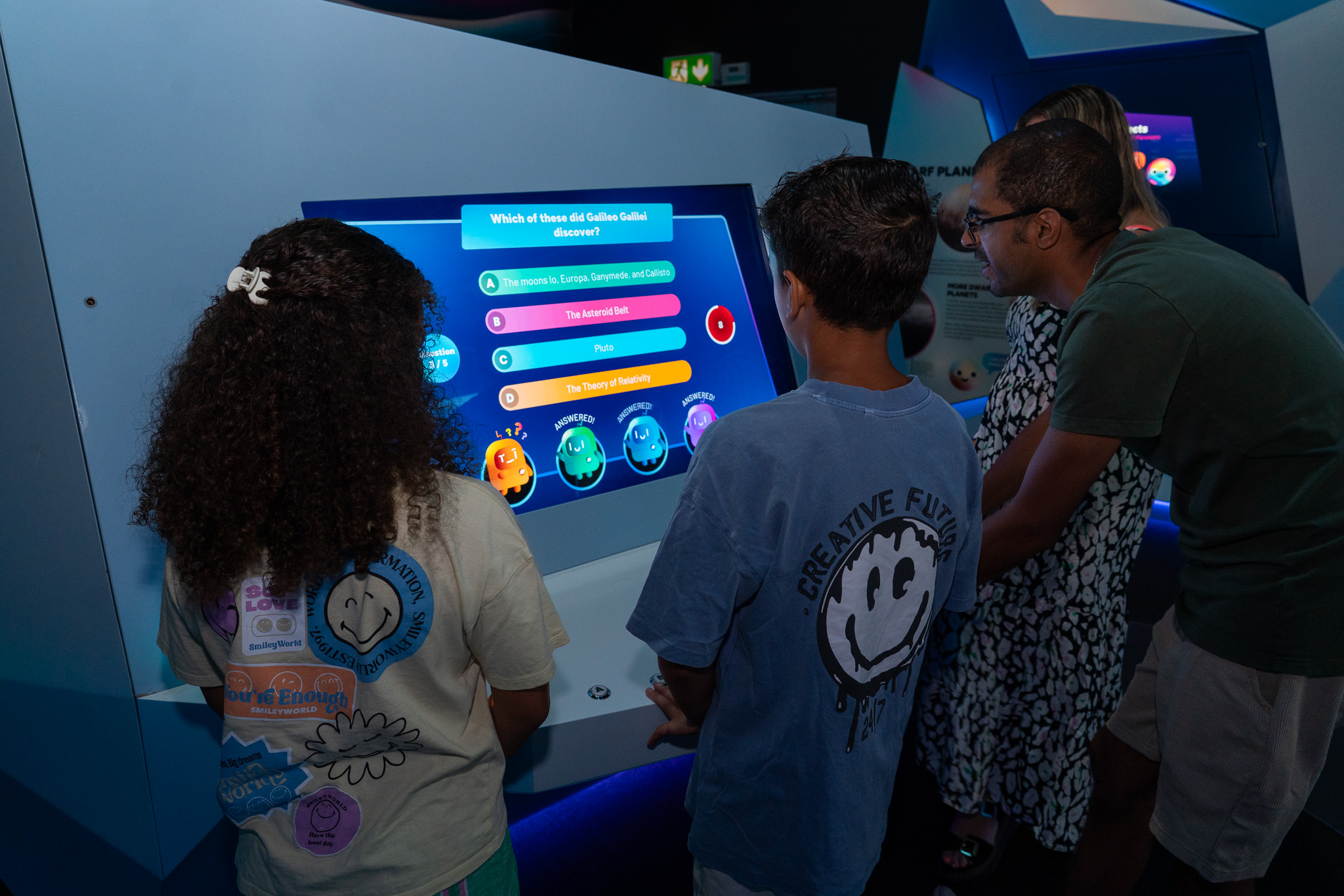
The biggest change is beyond Mars. The Asteroid Belt, gas giant planets, comets, and more feature in a completely new part of the gallery. You can experience winds on Neptune, debate whether Pluto is still a planet, and take part in the Quiz at the End of the Solar System. You can even smell Uranus. I wasn’t lying; you can smell things!
Our Aims
At the start of the project, we asked ourselves what we wanted the gallery to achieve. We had some key learning outcomes. I know, I know, I’m starting to sound like a supply teacher – but bear with me, this is just the setup. Two important ones were:
-
We have been observing the Outer Solar System for centuries, but there is still much for future generations to discover.
-
There is far more to the Solar System than eight planets and a star.
Learning Outcome One
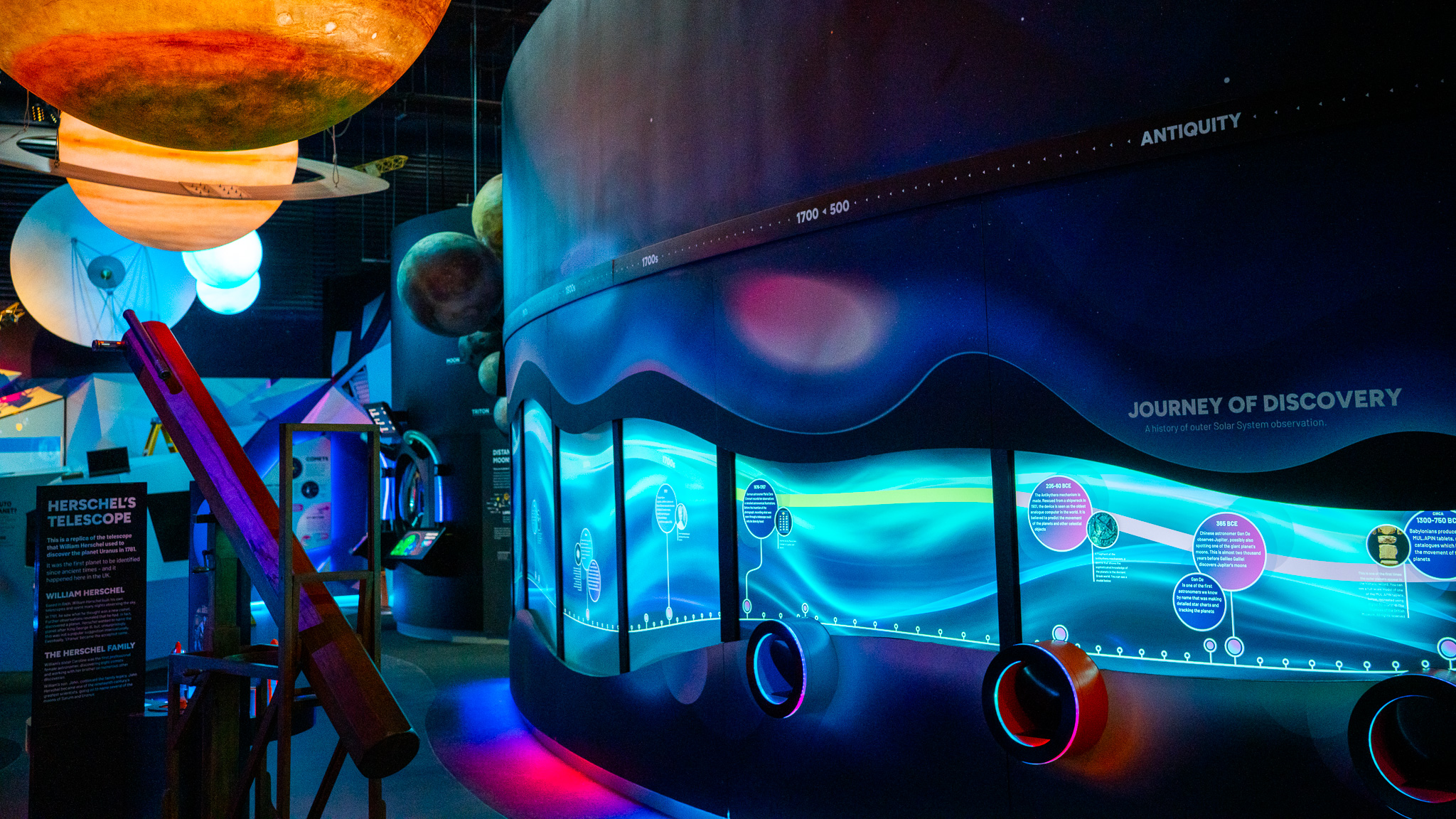
And now, like the best substitute teacher ever – ok, perhaps not as good as the one who let you watch The Simpsons when you were supposed to be doing maths – here’s some examples of how we did it. Firstly, our giant interactive timeline – Journey of Discovery: A History of outer Solar System observation. It looks at how our understanding of the outer Solar System has changed since ancient times. When did we discover Uranus and Neptune were even there? Who on earth were the Celestial Police? But the timeline doesn’t stop at the present day, it also looks ahead to the future and exciting missions like Dragonfly. Because, despite centuries of discovery – there really is still much more to find out.
Learning Outcome Two
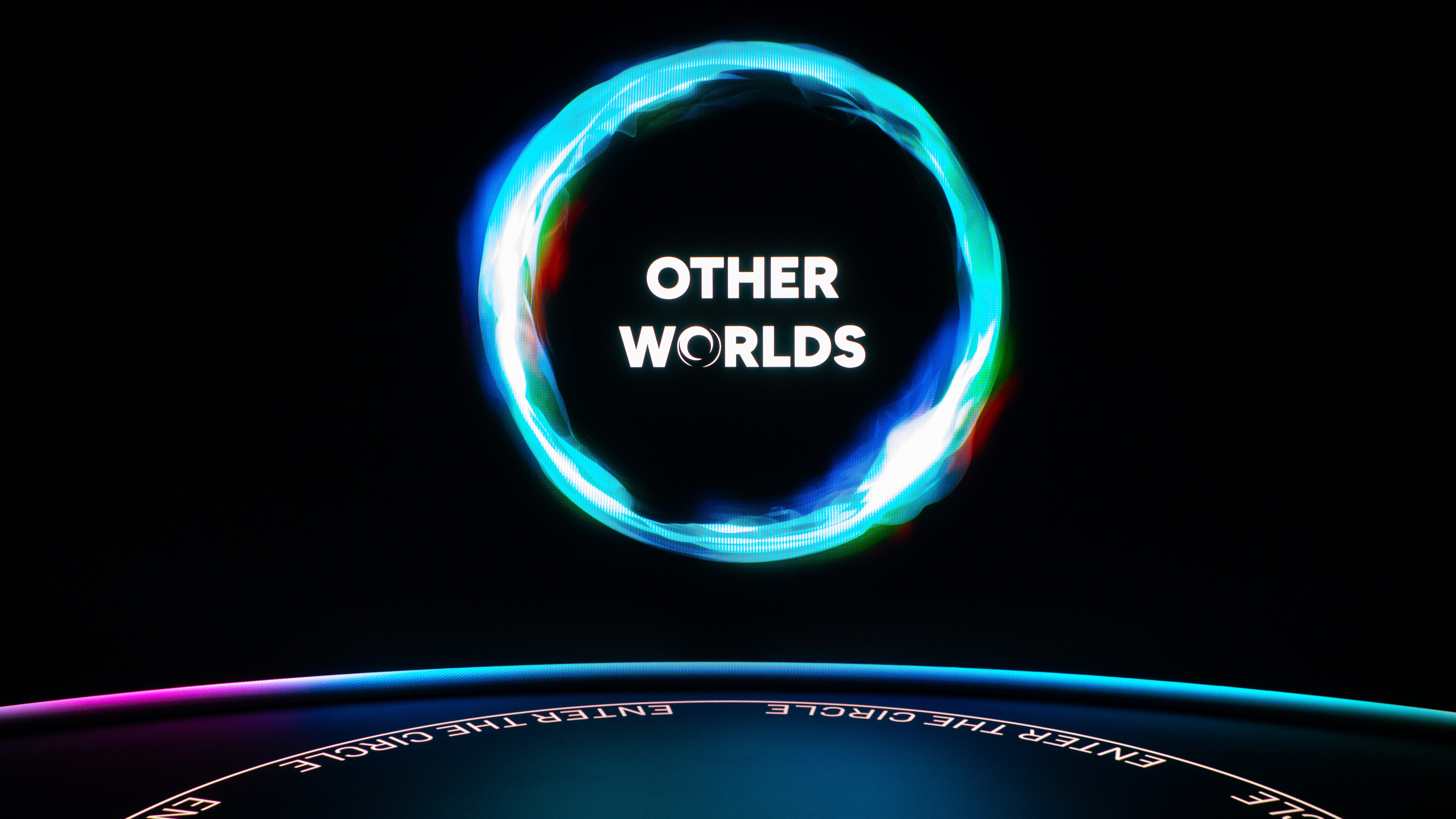
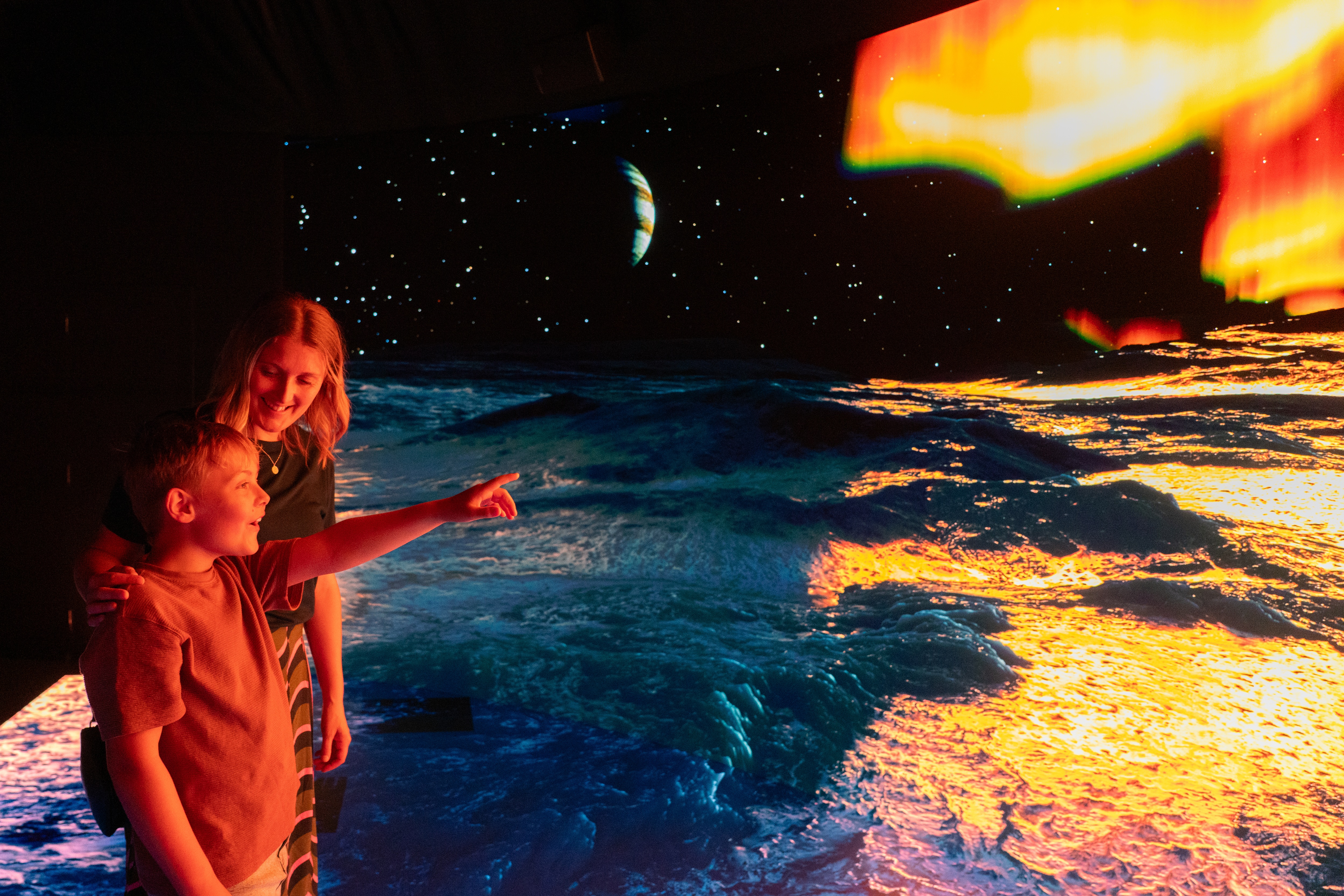
Ok, so Mr Kendall, you’ve covered learning objective one, but can we have the rest of the lesson outside as it’s such a nice day? Ok, ok – let’s go, I’m a cool teacher, just one of the gang. Oh god, I’ve said ‘gang’, that’s all my street cred gone. Now I’ve said, ‘street cred’. How can I win the class back? I know, let’s not just go outside, let’s go to Other Worlds – our new immersive experience. Have you ever wanted to see a methane-fall on Titan? A volcano erupt on Io? Travel to the bottom of the ocean on Europa? Well now you can.
Whenever I see incredible images sent back by missions like Cassini or Juno, I want to know what it would be like to stand on the surface. What would the landscape look like? Other Worlds lets you do just that. With help from scientists actually working on missions to the outer Solar System, we’ve made sure that the landscapes are grounded in reality. This is really what it might look like. Beautiful, familiar, yet alien. No actual aliens though. That we know of. Yet.
A New Planet?
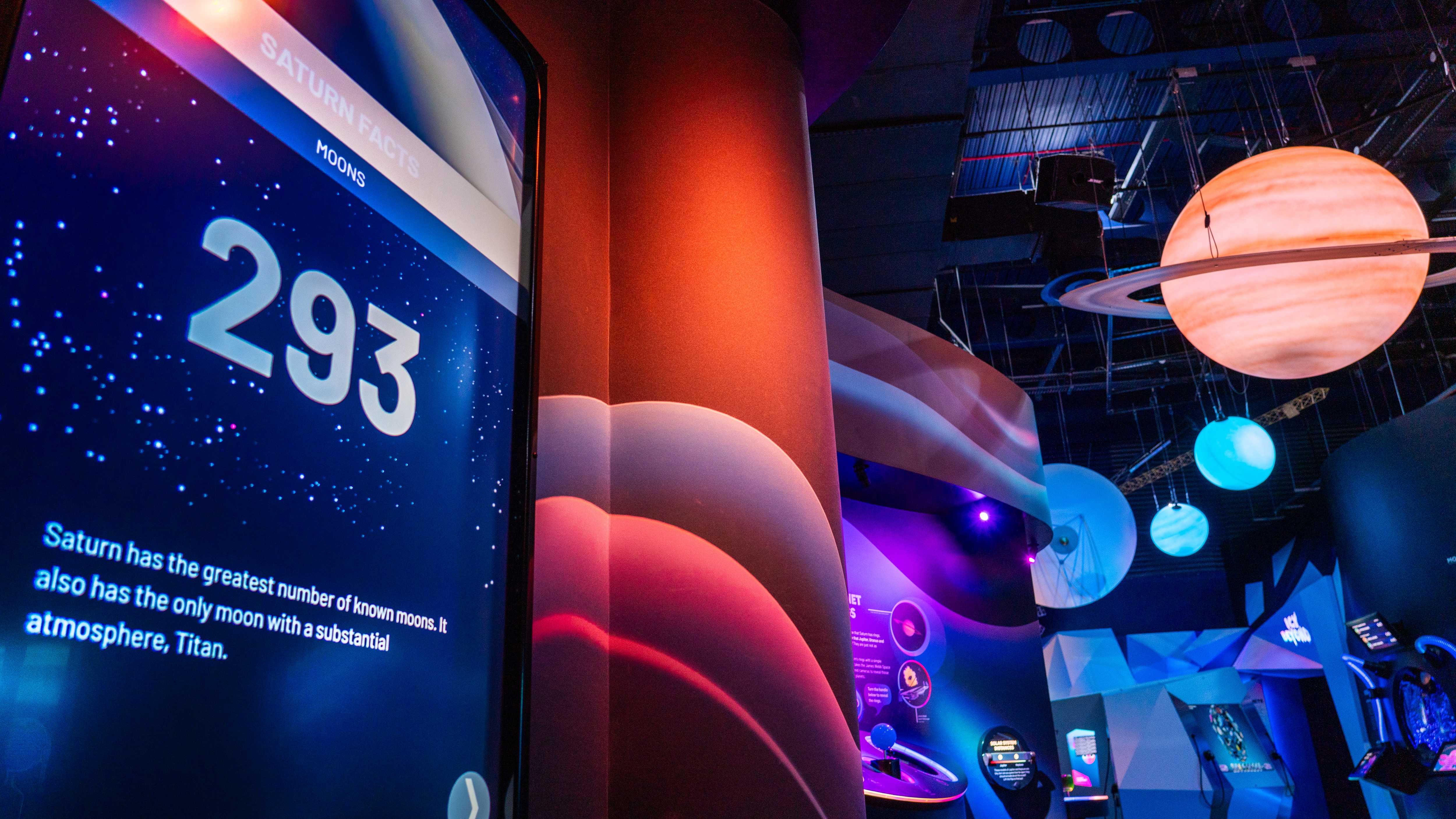
What of my predictions? I’ve only scratched the surface of what there is to do in the new gallery - but hopefully I’ve shown that it is better. But did they find Planet 9 on opening day? Well, no. They did find another moon though. A colleague sidled up to me and told me those pesky scientists had discovered another moon around Saturn that very day! My heart sank. But then I remembered that we had planned for this. One quick change on a screen and we were back up to date! If / when we find Planet 9, we’ll be ready.
With Thanks
There are too many people that worked on the project to thank individually, both internally and externally. Without our wonderful funders - Wolfson Foundation, Garfield Weston Foundation, and Royal Commission for the Exhibition of 1851 – it could not have happened. But many other people and organisations played a part too. We’ve tried to thank them all on this graphic at the entrance to the gallery, but you always worry you’ve missed someone! So, like a benevolent supply teacher, let me thank the whole class – you’ve all been wonderful. And you must come and visit Our Solar System!
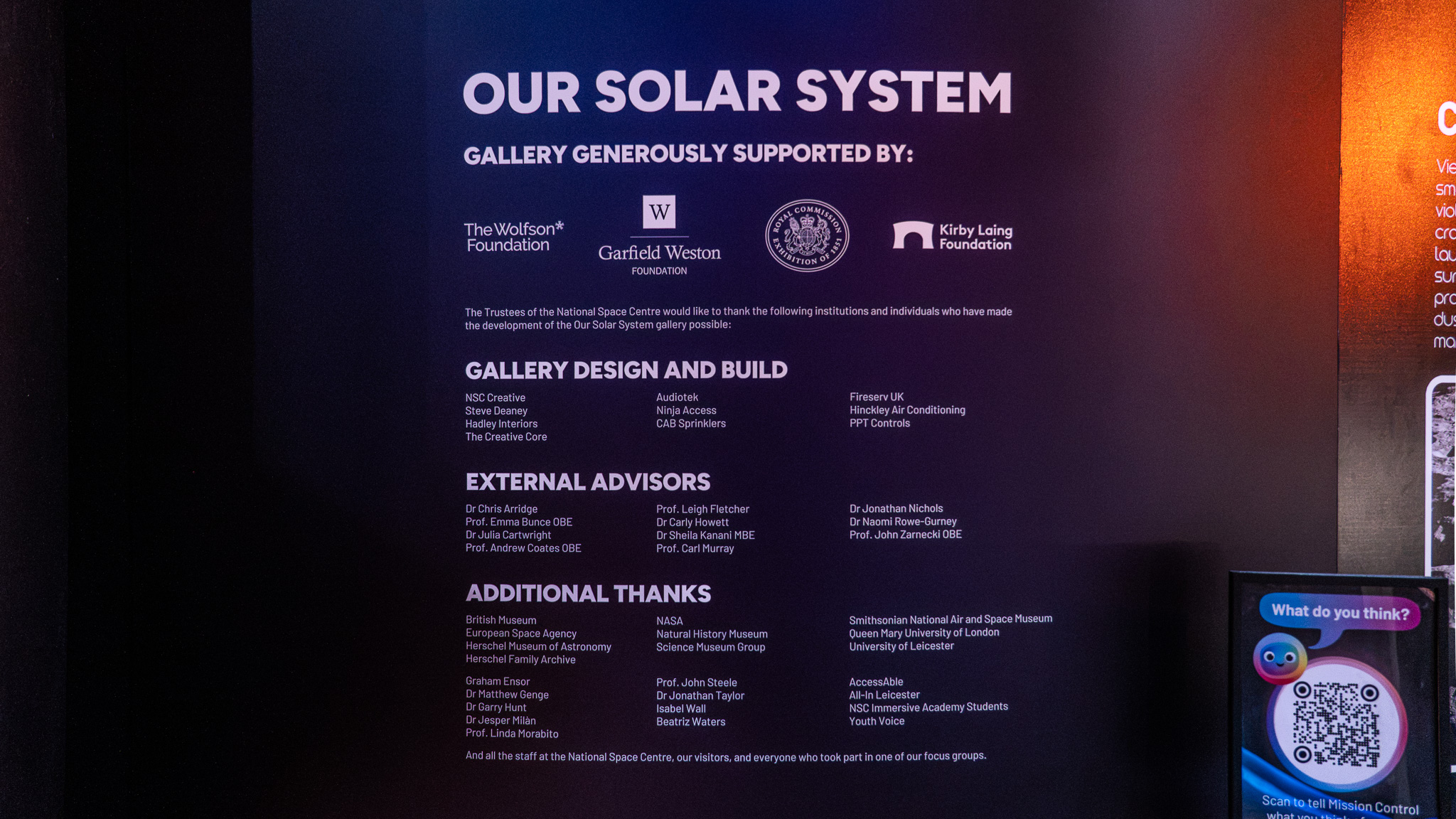
Image credits / references
-
Our Solar System – Credit: National Space Centre
-
Armstrong the T-Rex – Credit: National Space Centre
-
The Quiz at the End of the Solar System – Credit: National Space Centre
-
Other Worlds experience – Credit: National Space Centre
-
Journey of Discovery timeline – Credit: National Space Centre
-
Travel to Other Worlds – Credit: National Space Centre
-
Saturn’s moon as of 24.09.2026 – Credit: National Space Centre
- With thanks to – Credit: National Space Centre
