

2025 Space Highlights
- 29th Dec 2025
- Author: Alex Thompson
Ahead of arguably the most exciting space year in over half a decade, let’s look back at the milestones, pioneering missions and cutting-edge technology the past twelve months have given us.
Human Spaceflight
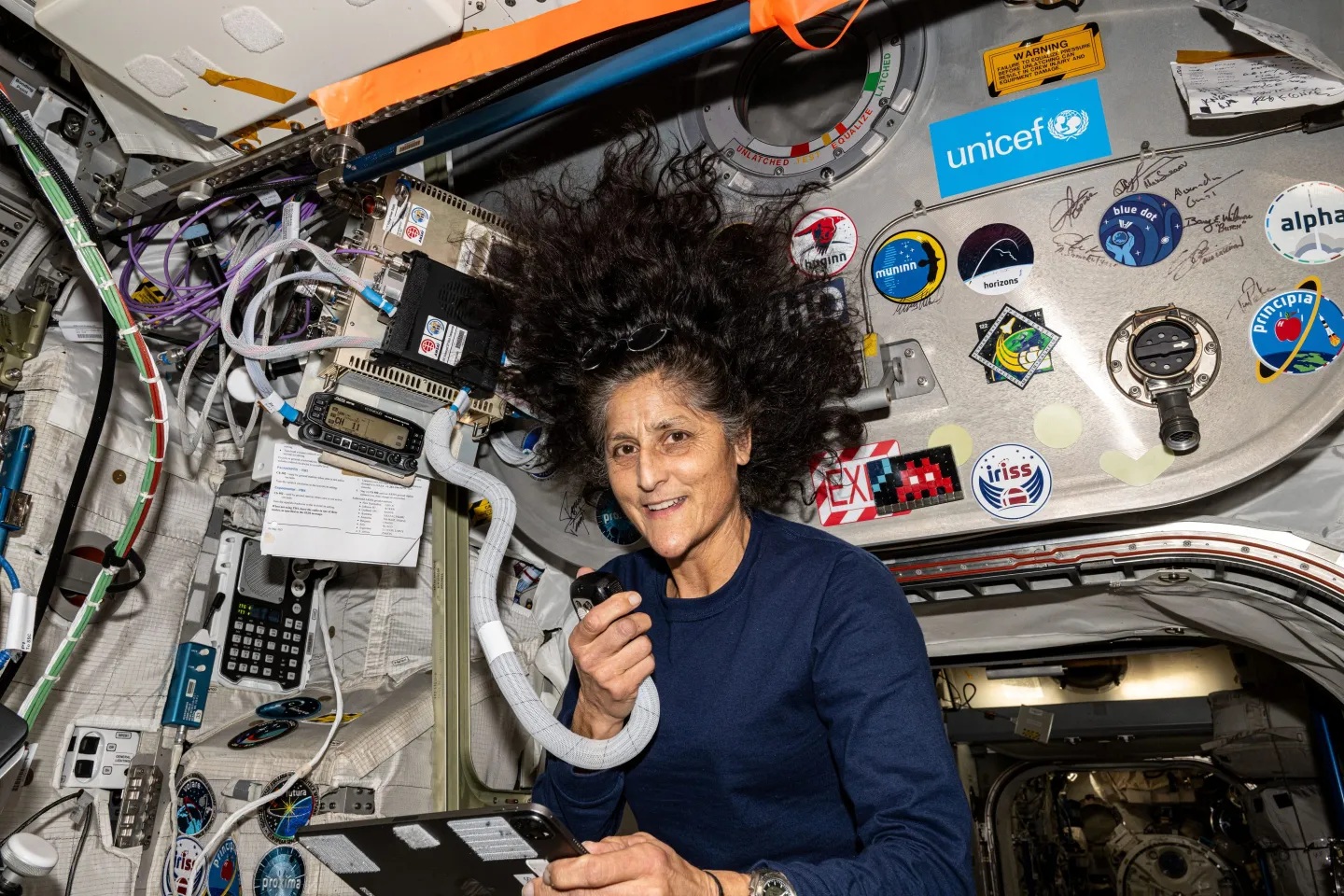
The main news story from a media perspective was the safe return to Earth of astronauts Sunita Williams and Butch Wilmore in March, after their eight-day mission turned into nine months on the International Space Station following issues with their Boeing Starliner spacecraft. They returned on a SpaceX Dragon with two other astronauts, Nick Hague and Alexsandr Gorbunov. Incredibly this wasn’t the only story this year of astronauts stranded on a space station due to a damaged spacecraft – the crew of Shenzhou 20 returned to Earth several days later than planned from the Chinese station Tiangong in November. They eventually used the spacecraft used by the Shenzhou 21 crew instead, due to their original craft being damaged by space debris. An uncrewed Shenzhou spacecraft was then sent to the station for the future return of the 21 team.
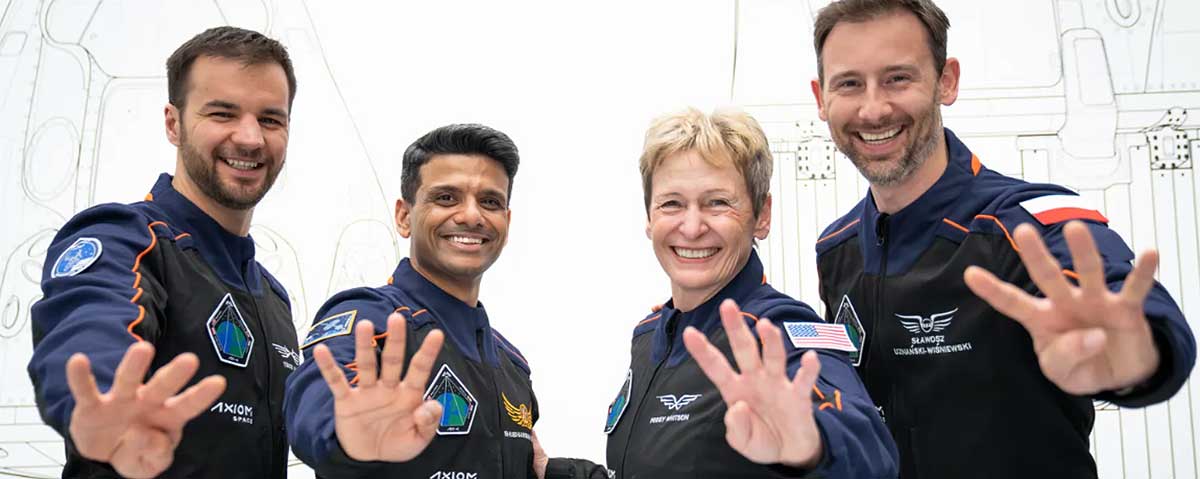
It wasn’t all bad for Williams – her extended mission meant she broke Peggy Whitson’s record for total combined spacewalk time by a female astronaut, setting a new benchmark of 62hrs 6mins on 30 January. Speaking of Whitson, she returned to the ISS in June as part of Axiom Mission 4. Operated by private company Axiom Space in conjunction with NASA and SpaceX, the mission saw the first use of the latter’s Crew Dragon Grace spacecraft. Joining Whiston on the flight was Shubhanshu Shukla of India, Poland’s Sławosz Uznański-Wiśniewski and Hungarian astronaut Tibor Kapu. This was each country’s second ever astronaut and marked the first human spaceflight of India’s Gaganyaan program.
And in a fun bit of trivia, all eight ISS docking ports were in use for the first time ever this month. This consisted of two SpaceX Dragons, two Soyuz capsules, two Russian Progress MS spacecrafts, a HTV-X1 from JAXA, and Northrop Grumman’s Cygnus XL, which also saw its maiden flight in September.
Rockets
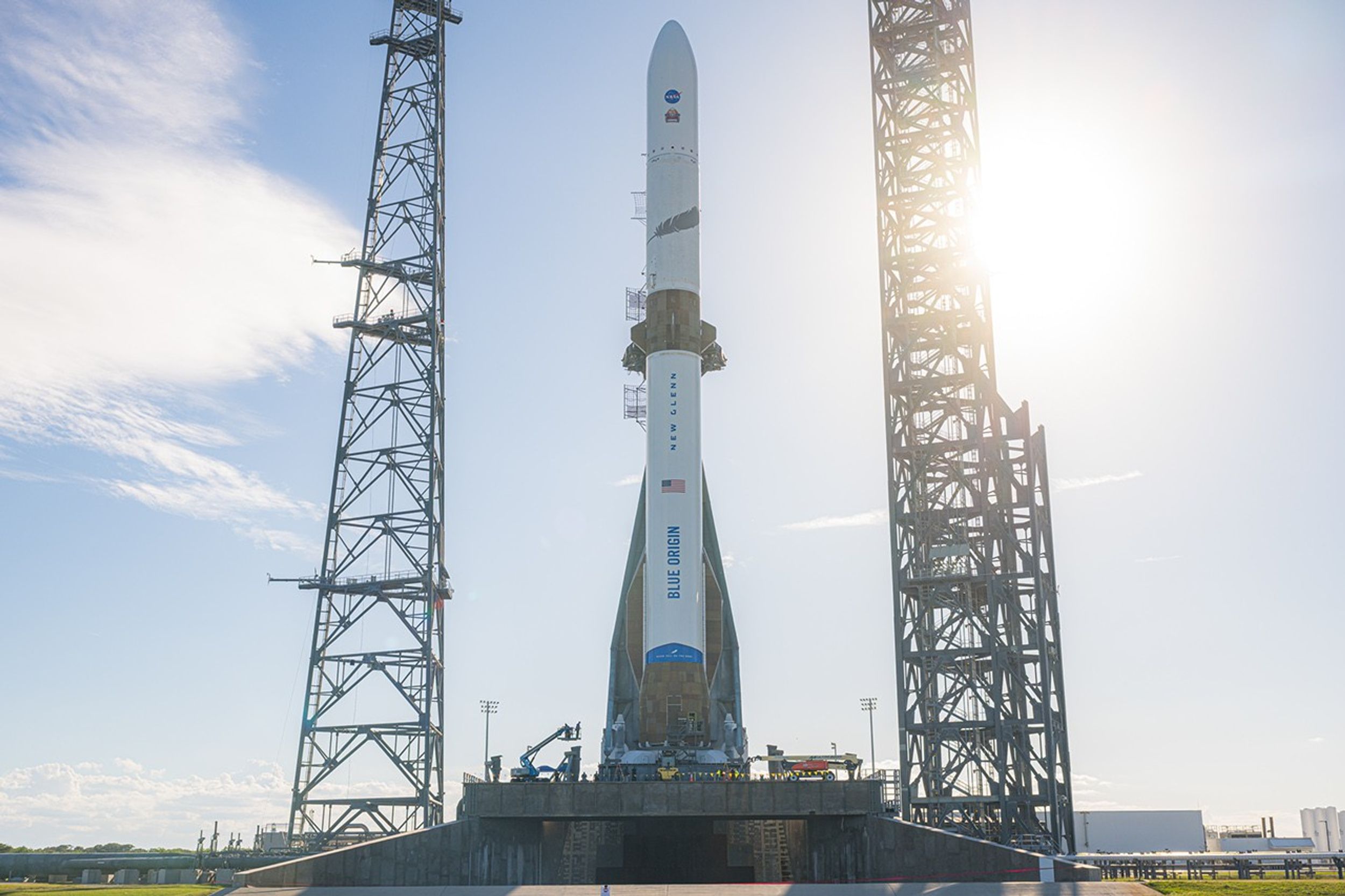
The big success of the year was the long anticipated (aka heavily delayed) launch of Blue Origin’s New Glenn rocket.
The launch vehicle finally took flight on 16 January (three days after the initial attempt), sending its second stage and prototype payload into medium earth orbit. However, the first stage was lost on descent. This was rectified on 13 November when the next New Glenn rocket, named “Never Tell Me the Odds”, successfully landed its first stage on a vessel 375 miles offshore in the Atlantic Ocean. This achievement made Blue Origin only the second company (after SpaceX) to orbit and land a vehicle’s booster stage.
The payload New Glenn was carrying that day was ESCAPADE, a NASA operated mission consisting of two spacecraft due to arrive at Mars in 2027. The scientific goals of ESCAPADE are to show how solar winds have slowly contributed to the loss of Mars’ atmosphere, and to study the planet’s magnetosphere. NASA also hope it will demonstrate the ability of low-cost planetary exploration.
Moon
Humanity should be returning to the Moon in 2026, but 2025 had several important missions that landed on the lunar surface, though some were more successful than others.
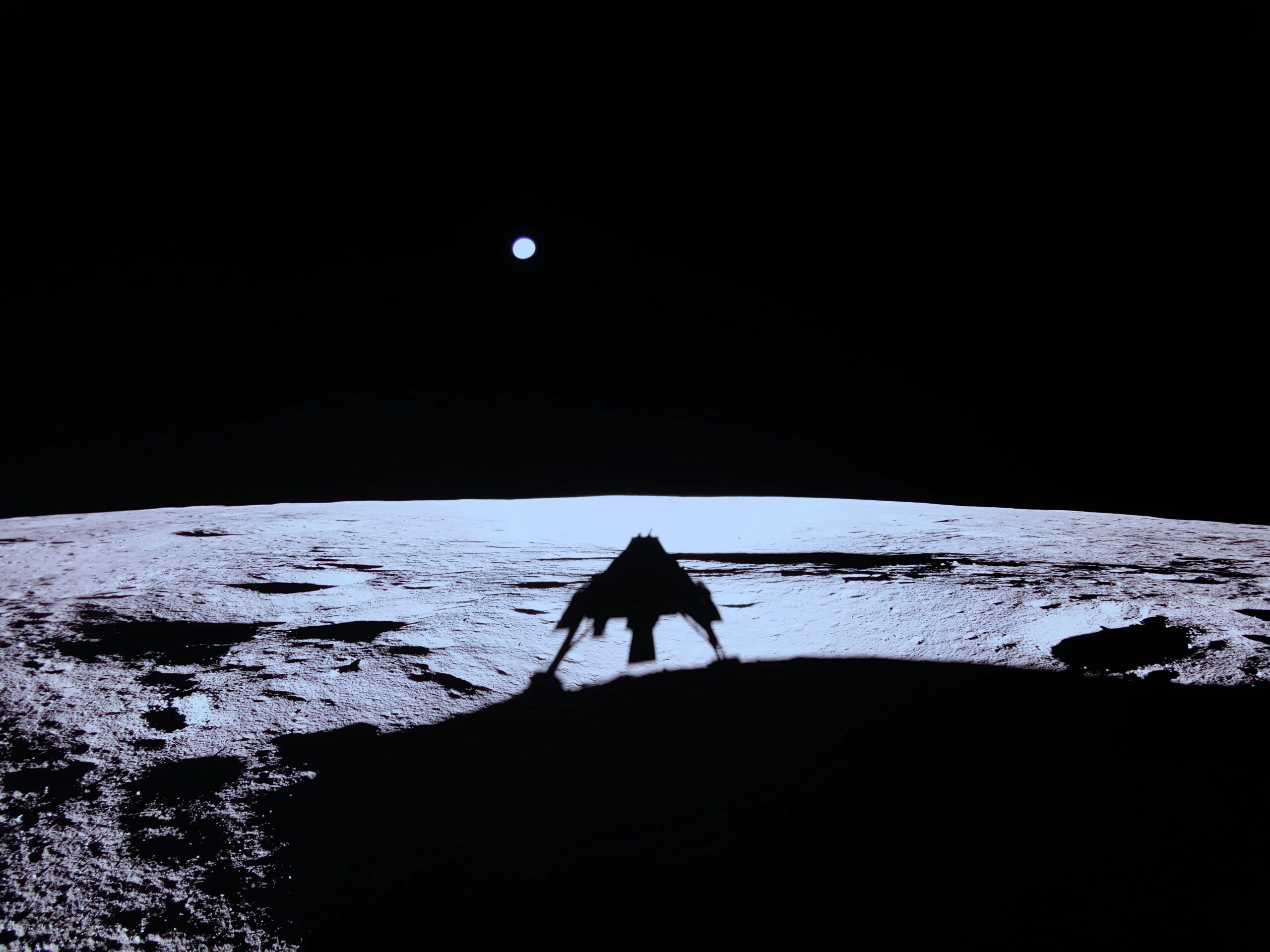
Two of these missions launched together aboard a Falcon 9 rocket on 15 January. Firefly Aerospace’s Blue Ghost Mission 1 successfully sent a lander to the Moon’s Mare Crisium region, successfully landing on 2 March. The spacecraft sent back over 110 GB of imaging and scientific data, including of an eclipse, far surpassing expectations and previous mission data yields from other NASA Commercial Lunar Payload Service programs.
Joining Blue Ghost on the flight was Hakuto-R mission by iSpace, designed to send a lunar lander and several other payloads to the Moon’s surface. Attempting a landing on 5 June at another lunar mare, named Frigoris, Hakuto unfortunately crashed into the surface and was destroyed.
Faring marginally better was Intuitive Machine’s IM-2 lunar lander. Carrying several NASA-sponsored experiments and micro rovers, IM-2 was launched on 27 February, landing a week later at Mons Mouton, the Moon’s largest named mountain. Despite landing intact, the rover was also on its side, complicating its scientific objectives and bringing a premature end to the mission. Ironically, a similar fate befell the spacecraft's predecessor, IM-1 in 2024.
Also launching along with IM-2 was Lunar Trailblazer, a spacecraft designed to study and better understand the Moon’s water and its cycle, however contact was lost with the spacecraft shortly after launch.
Spacecraft
Luckily there was a lot more success for spacecraft that were further out in our Solar System.
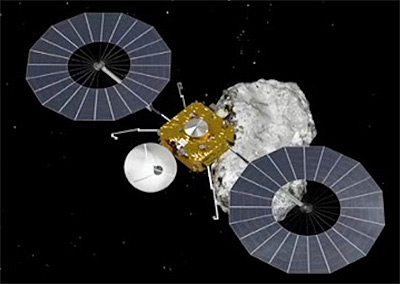
The China National Space Agency (CNSA) launched its Tianwen-2 mission on 28 May, with plans to return samples of asteroid 469219 Kamo’oalewa to Earth in 2027. The spacecraft will arrive at the asteroid in June and, after returning its findings to our planet, will rendezvous with main-belt comet 311P/PanSTARRS in early 2035.
NASA’s Lucy spacecraft reached its second main-belt asteroid, 52246 Donaldjohanson, on 20 April. Lucy managed to get within 600 miles of the asteroid at a speed of over 30,000mph, finding that it was much larger than originally thought at around 5 miles long and over 2 miles wide. The encounter was seen as a ‘dress rehearsal’ for when the mission approaches the Trojan asteroids closer to Jupiter, the first being Eurybates in August 2027.
Other long-term programmes that saw big milestones this year include ESA’s Solar Orbiter and Hera missions. Solar Orbiter took its first pictures and videos of the Sun’s south pole in March, whilst in the same month Hera observed Mars’ moon Deimos during its gravity assist at the Red Planet. The joint European (ESA) and Japanese (JAXA) Bepicolombo mission completed its sixth flyby of Mercury on 8 January ahead of its arrival at the planet next year, whilst NASA’s Europa Clipper and ESA’s Juice spacecraft were also successful with gravity assists at Mars and Venus respectfully, as they head out to study Jupiter’s icy moons early next decade.
As big as 2025 was for space, 2026 is set to be even bigger. Join us in a few days as we look ahead to the next twelve months!
Full references / credits:
(Banner) Blue Origin's New Glenn. Credit: Blue Origin
(1a): Sunita Williams. Credit: NASA
(1b): Axiom Mission 4 crew. Credit: Axiom
(2): New Glenn rocket. Credit: Blue Origin
(3): Blue Ghost Mission 1 on the Moon. Credit: Firefly Aerospace
(4): Tianwen-2. Credit: CNSA
